So last night, some of the girls in the neighborhood threw a pizza-and-movie party. I thought this sounded like a great plan for Valentine's Day . . . though, heck, I think this is a great plan for any Thursday you care to name. So I dropped on by, ate some pizza, and enquired what the movie was.
"Pride and Prejudice," said someone.
"The new one, or the like six-hour one?" asked another.
"The new one. With Kira Knightley. Yeah, we're NOT gonna be here for six hours."
I flinched a little. I saw the new P&P when it was first released on DVD, and remembered not liking it. But, thought I, that was a long while ago, and I've studied a lot of adaptation theory since then. Maybe I'm prejudiced against it by liking the A&E version so much. But there can be two different interpretations of the same text, and they can both be good, right? Maybe I was just being a snob because it wasn't "the right" P&P. I may be a literature grad student, but that shouldn't make me into a jerk who can't enjoy movies. And wouldn't it be ironic if it turns out I'm too prideful and too prejudiced to enjoy watching Pride and Prejudice?
So, with the best of intentions, I sat down to watch.
I had to leave by the Netherfield Ball.
I respectfully submit that my early-planted aversion to this film is based on neither pride nor prejudice. It's just simply quite awful. I know that there are many folks who like it, and to them I say: I'm so sorry. I really, really am. I'm so hesitant to declare myself a P&P snob when I so recently railed on the Les Mis snobs of my acquaintance. But to all you folks about there who like this movie, I say: there's so much more in this wonderful story for you to enjoy. It takes a bit of effort, and a bit of time, but hardly any money. You can love Pride and Prejudice for so much more than what you're seeing in this film.
Pride and Prejudice, right? Up there with the great novels of the English language. Seriously. Jane Austen was writing at the beginning of the Age of the Novel, when advances in printing technology and literary theory and paper-making allowed the novel, as we understand it, to emerge. Yeah, mid-1700s you get things like Samuel Richardson's Pamela and Henry Fielding's Tom Jones, and the late 1700s you've got the truly goshawful Coelebs in Search of a Wife (which qualifies as a novel in that it is long, prose, and fictional, but is an epic failure if you're looking for character or plot), but right around 1800 was when the English novel really truly took off, and P&P hit the market in 1813. That's two hundred years ago. Two hundred years people have been reading this book. Actually reading it. I mean, other novels from that period and earlier have survived and are still published, but how many have you read? Robinson Crusoe? Clarissa? The Absentee?
And it's never been outdone. P&P has some of the funniest, most human characters you will ever meet. Even with all we know now about psychology and behavioral theory, family relationships and human motivation, we can't harness all that information to draw characters any more engaging than the Bennetts, Bingleys, and Lucases. Part of the continuing delight of this novel is that you can read along and suddenly realize "Oh, my gosh, [character] is totally my sister, my roommate, my best friend, my mom!" That's part of the funniness of it: just the delight of meeting the caricatures of people you already know. When I'm watching a film adaptation of this book and can't remember which girl is Lydia and which is Kitty, there's a problem.
It's got some of the sharpest one-liners in the English language. "It is a truth universally acknowledged that a single man in possession of a good fortune must be in want of a wife." Two hundred years, and this is still funny. The dialogue and the details absolutely sparkle. It's like listening to a harpsichord: light, clean, quick, fun, emotive. It takes a meaningful level of neglect to make dialogue like this fall upon the ear like lazily-thrown bricks, which, unfortunately, the KN P&P achieves. It's so sad to listen to.
But here's my biggest concern about this film: the hair. The HAIR! In the brief portion I re-watched last night, KN was wearing her hair down (or half-down), in public, fully three times. Please, show me a fashion plate, a portrait, an engraving from this period that shows an upper-class adult woman wearing her hair down in public. Elizabeth should not have been allowed outside (or even downstairs) with her hair looking like that. It marks her as either a child, a lunatic, or a prostitute.*
Which unintentionally made her arrival at Netherfield really funny. She walks in to the room and my whole brain is like "Oh my GOSH her HAIR what is she THINKING?!?" However, the hypercritical Miss Bingley, who from a historical sense should have been even more shocked than I was, comments disdainfully on the state of Elizabeth's skirt. Because that's what's in the book.
There is a film adaptation of P&P that delights in the characters, celebrates the dialogue, and did its homework on hair and costuming. Yes, it's six hours long. Yes, that's a long time. But truly, my dear friends, it is worth it. I can't think of a better novel-to-film adaptation, period. I implore you to give it a try, and see what this lovely story when not just the lead actress, but the entire cast, are allowed to shine.
And if you enjoy that, I'd happily recommend to you the book itself. It is a delicious, sparkling, joyful commentary on the follies and merits of humanity. The text and the film aren't even in competition, as is so often the case: they enhance one another. The KN P&P, I'm sorry to say, just doesn't participate in that synergy at all. Which is sad. KN is a lovely actress and has done some great roles. She even does a darn good job here. But the costumers, screenplay writers, directors and supporting cast are just not where they need to be to let her performance blossom into a worthwhile story. Which is a shame, because it is a very worthwhile story.
So today, the 15th of February, I declare International Hug Your Favorite Novel-to-Film Adaptation Day! Because doesn't your favorite novel-to-film adaptation deserve a hug at least once a year?
*Maybe her house was on fire. It would be acceptable for her to go outside with her hair down if the house had caught fire while she was getting dressed. But if that were the case, you'd think it would be mentioned somewhere in the film. Also, you'd think that someone would do something to stop these house fires from happening three times in a single month.**
**A month with at least one day of pouring rain.
Friday, February 15, 2013

Friday, February 1, 2013
Experiments in Intercultural Fashion
Cold this morning. I got to school, stripped off my excessive layers of cold-busting outerwear, opened my laptop and went digging through the news for a story to use in class today. And what did I find?
Today is World Hijab Day!
A group of Muslim women organized this event to give non-Muslims, and Muslims who don't generally wear a hijab, a chance to give it a try. Though in the US we hear a lot about women in predominately Muslim countries being punished for not covering themselves enough, the news overlooks the Muslim women all over the world who wear head scarves or other coverings for the same reasons I wear sleeves: reverence for the body and for God. The Muslim women I have known have all made their own independent and educated decisions about whether or not to wear a head covering: some did, and were confident and happy doing so; others didn't, and were confident and happy abstaining.
I've wanted to try a hijab for ages. I think they're gorgeous. They frame the face so elegantly, and there's such a fantastic diversity of fabrics and colors and accessories to choose from. I love the boldness they imply: This is my faith. I'm proud of it. And, counterintuitive though it seems, I like the feminist implications thereof. A hijab says Here is my face. Look at it. Talk to me. Rather like last week's post, when you think about it: this woman is here to live her life, not to be pretty for you.
So when I realized that it was World Hijab Day, and I could try wearing a hijab without being disrespectful to another religion, I was FURIOUS. Why? Because I found out AFTER I left my house for the day.
So I improvised.

I have made my World Hijab Day hijab out of a green knit beret, a green textured scarf from Korea, and a humorous writing-teacher pin. It's a little warm, and of course if I'd found out about this in time I could be wearing my featherlight blue silk scarf from India with the bead fringe (rrgh). But for not knowing this was happening, I think I've managed to participate quite well.
I admit that I felt a little silly walking around campus with my scarf wrapped around my head. But that's what social experiments are all about! And how many of the women in my parents' neighborhood (which has a large population of immigrant families from Muslim countries) feel the same sort of awkwardness walking around Salt Lake in their beautiful hijabs? Beyond that, are there some that even feel afraid of becoming the targets of anti-Muslim hostility or violence?
So here's to you, ladies. Here's to your respect for your cultures, your religion, your bodies and yourselves. Thank you for setting an example of reverence and dedication to this Christian girl, encouraging her to be a more faithful follower of that God who is the Father of us all. And also: your scarves are absolutely gorgeous. Where do you get them?
Today is World Hijab Day!
A group of Muslim women organized this event to give non-Muslims, and Muslims who don't generally wear a hijab, a chance to give it a try. Though in the US we hear a lot about women in predominately Muslim countries being punished for not covering themselves enough, the news overlooks the Muslim women all over the world who wear head scarves or other coverings for the same reasons I wear sleeves: reverence for the body and for God. The Muslim women I have known have all made their own independent and educated decisions about whether or not to wear a head covering: some did, and were confident and happy doing so; others didn't, and were confident and happy abstaining.
I've wanted to try a hijab for ages. I think they're gorgeous. They frame the face so elegantly, and there's such a fantastic diversity of fabrics and colors and accessories to choose from. I love the boldness they imply: This is my faith. I'm proud of it. And, counterintuitive though it seems, I like the feminist implications thereof. A hijab says Here is my face. Look at it. Talk to me. Rather like last week's post, when you think about it: this woman is here to live her life, not to be pretty for you.
So when I realized that it was World Hijab Day, and I could try wearing a hijab without being disrespectful to another religion, I was FURIOUS. Why? Because I found out AFTER I left my house for the day.
So I improvised.

I have made my World Hijab Day hijab out of a green knit beret, a green textured scarf from Korea, and a humorous writing-teacher pin. It's a little warm, and of course if I'd found out about this in time I could be wearing my featherlight blue silk scarf from India with the bead fringe (rrgh). But for not knowing this was happening, I think I've managed to participate quite well.
I admit that I felt a little silly walking around campus with my scarf wrapped around my head. But that's what social experiments are all about! And how many of the women in my parents' neighborhood (which has a large population of immigrant families from Muslim countries) feel the same sort of awkwardness walking around Salt Lake in their beautiful hijabs? Beyond that, are there some that even feel afraid of becoming the targets of anti-Muslim hostility or violence?
So here's to you, ladies. Here's to your respect for your cultures, your religion, your bodies and yourselves. Thank you for setting an example of reverence and dedication to this Christian girl, encouraging her to be a more faithful follower of that God who is the Father of us all. And also: your scarves are absolutely gorgeous. Where do you get them?
Thursday, January 24, 2013
I'm Not Here to Look Pretty
"Sorry to spoil those lily-white hands of yours, love, but you're a member of the working class now. You can forget about looking pretty."
A Little Princess
I was sick last week.
Stomach bug. Nothing serious. Just a few days of gastrointestinal misery, as happens to the best of us on occasion. It didn't prevent me from going to school, though it seriously decreased my enjoyment of wallowing in education, which is usually my very favorite thing to do.
While I was at school, sick and miserable, I kept catching glances of myself in mirrors, windows, and computer screens. I looked pretty awful.
I don't know about any of you, but when sick I have no desire to expend energy in prettifying myself. I don't even want to expend the energy needed to maintain prettification (i.e., remembering to not rub my eyes because I'll smudge my makeup and cause ten minutes of miserable stinging). It was impressive that I'd managed to make it to school at all, and even more amazing that I'd managed to change into something other than my pajamas. But still, I felt unhappy. Self-conscious. Guilty, even. Like the feeling that you get when there's a group project due and you haven't done your part. I felt like I was publicly letting down the university by appearing on campus looking like a sickie. I felt that I owed apologies to my classmates and professors by offending their eyes with my unbrushed hair.
And then something occurred to me. You know what? You're not here to look pretty.
The more I thought about it, the truer it became. It is not, in fact, my job to look pretty. That is not any part of what BYU expects me to do. They expect me to teach my class and grade their homework. They expect me to show up to my seminars on time and prepared. They expect me to learn stuff, and publish it as commendable research that will reflect well on the university. All of these things are my job. Being pretty is not part of that. If I were a model, it would be different. If I were a salesperson of any kind, that would be another story. If I were a dancing girl outside a Korean electronics store, a waitress at Hooter's, or a news anchor, then yes, 'pretty' would be part of my job. But I am an academic. My job is to work.
And then I took it further. If I'm not on campus to look pretty, is there anywhere that I go where prettiness is the expectation? Church, I thought. But . . . no . . . I'm at church to worship, serve, and edify. 'Pretty' is not part of my obligation to God. Dressing neatly and respectfully? Yes, sure, that's expected. But my physical attractiveness has no bearing on the quality of my worship and shouldn't impact the worship of those around me.
When I'm hanging out with my friends, am I there to look pretty? Certainly not. I'm there to have fun. I enjoy the company of my friends whether they are wearing makeup or not; I can only assume they feel the same.
When I'm dancing, am I there to look pretty? Not at rehearsal. I'm there to work. For performances, yes, but I'm there to look pretty as a Romanian, Croatian, or Bulgarian. American beauty standards don't come into play.
When I attend weddings? Maybe. To some extent. It is my job not to stand out in any photos. I accept that responsibility.
When I go to the opera? Absolutely. Dressing to the nines is de rigeur in that particular time and place.
But in the ordinary course of things, my day-in, day-out life, I am NOT here to look pretty. That is not my job. I have plenty of jobs to do, and my ability to do them is not affected at all by whether I look like a movie star or a hobo. I'm an academic. A teacher. A member of society. Not a painting, a potted plant, or a string of Christmas lights. I'm a student and a scholar, a friend and a sister, a designated driver, a cheesemaker, a lifeguard. I'm not a piece of modern art with delusions of grandeur.
So I'm taking the time I've been spending on makeup and I'm devoting it to reading 18th century plays. That is all.
A Little Princess
I was sick last week.
Stomach bug. Nothing serious. Just a few days of gastrointestinal misery, as happens to the best of us on occasion. It didn't prevent me from going to school, though it seriously decreased my enjoyment of wallowing in education, which is usually my very favorite thing to do.
While I was at school, sick and miserable, I kept catching glances of myself in mirrors, windows, and computer screens. I looked pretty awful.
I don't know about any of you, but when sick I have no desire to expend energy in prettifying myself. I don't even want to expend the energy needed to maintain prettification (i.e., remembering to not rub my eyes because I'll smudge my makeup and cause ten minutes of miserable stinging). It was impressive that I'd managed to make it to school at all, and even more amazing that I'd managed to change into something other than my pajamas. But still, I felt unhappy. Self-conscious. Guilty, even. Like the feeling that you get when there's a group project due and you haven't done your part. I felt like I was publicly letting down the university by appearing on campus looking like a sickie. I felt that I owed apologies to my classmates and professors by offending their eyes with my unbrushed hair.
And then something occurred to me. You know what? You're not here to look pretty.
The more I thought about it, the truer it became. It is not, in fact, my job to look pretty. That is not any part of what BYU expects me to do. They expect me to teach my class and grade their homework. They expect me to show up to my seminars on time and prepared. They expect me to learn stuff, and publish it as commendable research that will reflect well on the university. All of these things are my job. Being pretty is not part of that. If I were a model, it would be different. If I were a salesperson of any kind, that would be another story. If I were a dancing girl outside a Korean electronics store, a waitress at Hooter's, or a news anchor, then yes, 'pretty' would be part of my job. But I am an academic. My job is to work.
And then I took it further. If I'm not on campus to look pretty, is there anywhere that I go where prettiness is the expectation? Church, I thought. But . . . no . . . I'm at church to worship, serve, and edify. 'Pretty' is not part of my obligation to God. Dressing neatly and respectfully? Yes, sure, that's expected. But my physical attractiveness has no bearing on the quality of my worship and shouldn't impact the worship of those around me.
When I'm hanging out with my friends, am I there to look pretty? Certainly not. I'm there to have fun. I enjoy the company of my friends whether they are wearing makeup or not; I can only assume they feel the same.
When I'm dancing, am I there to look pretty? Not at rehearsal. I'm there to work. For performances, yes, but I'm there to look pretty as a Romanian, Croatian, or Bulgarian. American beauty standards don't come into play.
When I attend weddings? Maybe. To some extent. It is my job not to stand out in any photos. I accept that responsibility.
When I go to the opera? Absolutely. Dressing to the nines is de rigeur in that particular time and place.
But in the ordinary course of things, my day-in, day-out life, I am NOT here to look pretty. That is not my job. I have plenty of jobs to do, and my ability to do them is not affected at all by whether I look like a movie star or a hobo. I'm an academic. A teacher. A member of society. Not a painting, a potted plant, or a string of Christmas lights. I'm a student and a scholar, a friend and a sister, a designated driver, a cheesemaker, a lifeguard. I'm not a piece of modern art with delusions of grandeur.
So I'm taking the time I've been spending on makeup and I'm devoting it to reading 18th century plays. That is all.
 |
| Teacher. Part-time. |
Wednesday, January 9, 2013
Do You Hear the People Sing?
I've never liked Les Misérables.

This is not because I have anything in particular against it, in any incarnation. It has done me no harm. But throughout my life people have been shoving it at me, or me at it, and that will wear on anybody after a while.
It started when I was maybe ten years old, and my very first Best Friend, Katherine Rose Clarkson, asked me if I liked laymiz. I assumed it was a kind of food. She soon set me straight and played for me 'At the End of the Day,' of which I could understand not a word. I smiled and nodded. Very nice, said I. Very . . . fancy.
This wouldn't be that big a deal if it had only happened once. But it never seems to stop. There is a certain kind of girl who, upon meeting me, immediately wants to know if I like Les Mis and, upon learning that I've never seen or cared for it, proceeds to A. tell me how great it was that one time she saw it in (fill in city here), B. summarize for me the psychotically complicated plot, and C. play or sing for me her favorite song.
I smile and nod. Very nice, say I. That sounds great.
All three of these things have slowly begun to annoy me more and more. In the third place, I freely admit that much of the music in Les Mis is very pretty . . . but I'm not a musician, nor a trained singer. I find pretty songs to be utterly boring. I love, love, love songs filled with emotion and personality, that tell a story, that transport me to somewhere else, but no song in Les Mis has ever done that for me (Except 'One Day More,' the day that I learned it was actually about Return of the Jedi). They are always just pretty songs, sung by people with pretty voices. And the kindly offered plot summary helps not at all, because . . .
In the second place, Victor Hugo does not condense well. At all.
 |
| Really, not well at all. |
His novels are massive epic brick-books that skip all over France (and sometimes several other countries) and jump huge blocks of time at the drop of a hat and add characters without warning or restraint. The fact that anyone managed to fit a Victor Hugo novel into a three-hour production is a miracle. Fitting that three-hour production into a ten-minute synopsis is never going to be effective. And the summaries always have this flawed underlying assumption, which brings us back to . . .
The first place. I am so happy that you got to see Les Mis onstage in London. Or New York. Or Los Angeles. Or Antwerp. Or Montreal. Or Minneapolis. Or New Delhi. Or wherever. But the assumption that someday I, too, will have that chance, and your quick synopsis will be fleshed out into a full story and I will finally appreciate what you're talking about, is painful. It is an unconsciously done, but unsubtle reminder, that you (or your parents, or grandparents, or boyfriend, or whoever) have the disposable cash to buy multi-hundred-dollar tickets to professional theater productions, which I do not. And never will, if all goes well and I realize my dream of becoming an underpaid academic with no health insurance and a car held together with duct tape.
So all my life I have smiled and nodded through summary after summary of Les Mis, and patiently listened to one song after another, and listened appreciatively to gushing reviews of how so-and-so playing this that or the other character was just amazing and how I just have to go see it.
Then I saw the movie.
It was kind of an accident. New Year's Eve Day, I was semi-stranded at the mall after conducting an optometric investigation (which is a story for another post) and thought to myself, Hey, what the heck. I'll grab a plate of pasta and then go see Les Mis, in honor of my upcoming unemployment. After all, so much of my life has been spent listening to snippets and summaries, I might as well have a look.
I saw it. And I loved it.
I was transported. I was in tears. The music broke my heart and knit it back together again. I loved the richness of the characterization and the vivid portrayal of the history and the deep and beautiful Christian metaphors. I went through half a packet of tissues. I loved watching Anne Hathaway descend into rage and despair and heartbreak and then be lifted up by a sliver of hope as she lay dying. I loved watching Helena Bonham Carter be cynical and coarse and ridiculous and manipulative. I loved watching Russell Crowe watch his comfortable paradigm of perfect, infallible and uncompromising justice crumble before his eyes. I loved watching Hugh Jackman struggle to choose between his need for survival and his need to redeem other people as he once was redeemed. Whoever the young actors were playing Cosette and Gavroche, I loved them, too!
I left the theater feeling absolutely bouyant. I'd finally caught Les Mis fever. I was humming the tunes and vowing to learn the words so that I, too, could sing them. Some part of me wanted to climb up on something tall and scream "AUX BARRICADES!" (Of course, there's a strong streak of Frenchness in me, so this is pretty normal in any case.) And I was eager to meet up with all my Les Mis-loving friends and finally share in their transports at this astonishing piece of musical theater.
They hated it.
They hated it!
Because it seems that Anne Hathaway ruined her big number by crying in the middle of it, and Hugh Jackman ruined everything by being at the top of his range, and Russell Crowe ruined all of musical theater and most of western civilization by doing . . . something. I'm still not sure what. Anyway, it was horrible. A travesty. Nothing like when they saw it in New York. Or London. Or Shanghai. Or wherever.
 |
| Pictured: The End of the World as We Know It. |
I was crushed. I wanted to take my Russell-Crowe-contaminated Les Mis and wrap it up in my favorite blanket and hide under my bed with it, where I could love it in shame and secrecy.
And then I started thinking, and I started to get mad.
Because, really, what the heck? Okay, so you may think that the film version wasn't as good as the stage production. Fine. I do this with book-to-film adaptations all the time. The difference is that people can get hold of the book, for free, and read it so that they can either agree or disagree with me. Access to books is not limited by socioeconomic status in this country. Access to live theater is. A more apt parallel would be me arguing 'You know, the play is absolute crap compared to the original book IN FRENCH. Translations are a waste of time. If you don't love the French version, you obviously have no taste." I don't say this because I know full well that reading Victor Hugo in French is an experience only available to a limited number of people, so I can't hold it up as the standard by which all other experiences should be judged.
Is the issue here Russell Crowe's voice, or is it that this formerly once-in-a-lifetime, break-the-bank, utterly exclusive experience is now available to anyone with six bucks for a matinee movie ticket and another dollar fifty for bus fare? God forbid that the unwashed masses should get their hands on Les Misérables. It might give them ideas.
I loved this movie. I thought Russell Crowe did a beautiful job. I enjoyed watching his performance, and learned a great deal from it about the nature of justice and goodness. Who cares if it wasn't "as good" as whoever-the-heck else played the part in the West End? I'm never going to be able to see that, so I don't have to care. And no one is going to make me.
Do you hear the people sing? They wanted to see Les Mis. And now they can.
 |
| AUX CINEMAS!!! |
Tuesday, October 16, 2012
Be Afraid
Courage is not the absence of fear, but the knowledge that something is more important than fear.
The Princess Diaries
So it being Halloween and all, I thought I'd talk about things I'm afraid of, or have been afraid of, or may be afraid of in the future.
I'll start off by saying that yes, I am rather afraid of people in scary costumes who jump out at me suddenly after a reasonable buildup of tension. But I'm mostly afraid of this because it often happens, in this particular chain of events, that adrenalin takes over my body and I hit the jumper. Often pretty hard.* So I've learned to avoid these kinds of situations.
Here is a small list of things that I've been afraid of over the years:


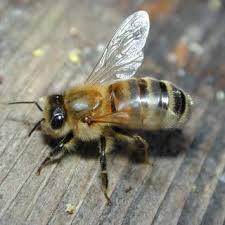



Most of these fears I now consider conquered. Most of them had to be conquered over eight summers of working as a summer camp counselor. Some Are only conquered because I use one crutch or another (big tough hiking-shoe sandals make slimy lake plants less of an issue), and some I just had to suck it up and deal with (ticks, once my ultimate paralyzing kryptonite-level terror, are now just something I have to fish out of my girls' hair before they go to sleep at night). Some have even become pleasant to me (the onions, peppers, roller coasters, and spiders. Once I discovered that killing spiders is bad luck, they all became my friends. I like to have at least two living in my bathroom at any given time).
My life now contains three remaining major fears:


The heights thing is a product of growing up in Minnesota and then being abruptly transplanted into Utah. Before I moved here, it never occurred to me that the ground could just stop and be empty air for who-knows-how-many miles all the way to the bone-crunching bottom of the cliff. Minnesota does not have cliffs. Any irregularities in ground level are covered by trees, so if you do fall, you don't fall all the way to the bottom of the (whatever), you just fall as far as the first tree and then you stop. High on my list of Most Embarrassing Moments was my first church youth group outing here in Salt Lake, during which we hiked the short, pleasant trail to the top of Mount Ensign and I had a complete trembling tear-drenched freakout in front of a jury of my peers who had lived comfortably around cliffs their entire lives. I'm not in touch with any of those people anymore.
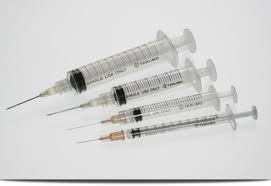
Needles, my mother swears up and down, are because of a traumatic pneumonia-induced hospital stay when I was two. I don't remember this incident at all, so I have to take her word for it. But the fact remains that needles just plain suck. Often literally. I don't like the consciously-induced pain, I don't like the rape-evoking invasion, and I don't like the residual damage of having a small metal tube shoved through my skin and my muscles and my veins which are all trying to do their jobs without holes in them. This fear keeps me from getting an annual flu shot (I just wash my hands and hope for the best) and makes me dread tetanus vaccinations more than stepping on rusty nails. (Nail went straight through my shoe and well into my foot, and I was calm as a summer's morning. Doctor yanked it out, and I was cool as a cucumber. Someone asked "When was your last tetanus booster?" and I collapsed into a quivering RoseE-shaped Jell-O mold, slowly leaking pathetic tears.)
I do, however, give blood. I give it fairly regularly. I make sure everyone knows that I'm scared of needles when I go to donate, so I will get the appropriate amount of encouragement and pity. But it's the same thing as the ticks, really: the fears that I cannot face for my own sake I can bear for the sake of others. It could be that I'm a selfless wonderful person, or it could just be that I value saving face more than self-preservation.
So I'm afraid of lots of things. Most of these things I've learned to cope with in one way or another. One of my camp buddies once observed that she would sort me into Gryffindor, since most of my stories involve me being scared of something and dealing with it anyway. This observation made me feel warm and fuzzy, and so I tattooed it upon my heart. Metaphorically. Because tattoos involve needles.
But then there's storms.
The storm thing makes me mad. I love storms. I love the way they smell and the delicious way they drain away the day's heat and the mighty wildness of a world that may act sedate most of the time but will never truly be tame. But, this summer, there was an incident. And post-incident, I now jump out of my skin at the first rumble of thunder (or anything that sounds like a rumble of thunder, like someone moving furniture in another room or unexpected lawn mowers). Thunder is now the only thing in my life that makes me want to hide under my bed. And I hate that. I don't want to be that person . . . the girl who's scared of storms, like Kotah, my parents' deeply cowardly small auxiliary back-up dog. I don't want to be the girl who needs to be held until the weather clears . . . but at the same time I hate being alone under those gray, wild skies.
NO. Because I am ME, and I have dealt with spiders and ticks and slimy lake plants and blood donations and that episode of X-Files that Stephen King wrote. I can drive along the drop-offs of Yellowstone and eat food so spicy it makes my father's eyes water. I've been stung by bees, crushed by horses, and impaled by nails without batting an eye. I will not let this storm thing beat me. I will smack it in the face, and to blazes with what Prez would say.
I am afraid.
But don't think that's gonna stop me.
* That was an interesting weekly report to my mission president. "Dear Prez, before you read Sister Pak Sung Hee's letter, let me explain to you what really happened . . . but before I even do that, I must confess that yes, I smacked her across the face and knocked her off her feet and back into her desk chair. But she was lurking around the corner with her hair combed over her face! You know what long, straight Asian hair she has! It was the thing from The Ring (which I have not seen and now never will) and it was gonna eat me and I screamed and then I'd smacked her and it was already over and I felt really bad but she started it."
The Princess Diaries
So it being Halloween and all, I thought I'd talk about things I'm afraid of, or have been afraid of, or may be afraid of in the future.
I'll start off by saying that yes, I am rather afraid of people in scary costumes who jump out at me suddenly after a reasonable buildup of tension. But I'm mostly afraid of this because it often happens, in this particular chain of events, that adrenalin takes over my body and I hit the jumper. Often pretty hard.* So I've learned to avoid these kinds of situations.
Here is a small list of things that I've been afraid of over the years:
Ticks

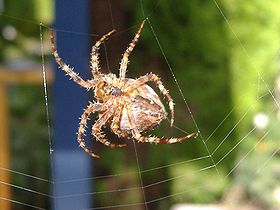
Spiders
Ants

Slimy lake plants

Sand

Caterpillars

Bees
Peppers
Onions

Roller Coasters
The X-Files
Most of these fears I now consider conquered. Most of them had to be conquered over eight summers of working as a summer camp counselor. Some Are only conquered because I use one crutch or another (big tough hiking-shoe sandals make slimy lake plants less of an issue), and some I just had to suck it up and deal with (ticks, once my ultimate paralyzing kryptonite-level terror, are now just something I have to fish out of my girls' hair before they go to sleep at night). Some have even become pleasant to me (the onions, peppers, roller coasters, and spiders. Once I discovered that killing spiders is bad luck, they all became my friends. I like to have at least two living in my bathroom at any given time).
My life now contains three remaining major fears:
Heights.
Needles.
And, most recently, storms.
The heights thing is a product of growing up in Minnesota and then being abruptly transplanted into Utah. Before I moved here, it never occurred to me that the ground could just stop and be empty air for who-knows-how-many miles all the way to the bone-crunching bottom of the cliff. Minnesota does not have cliffs. Any irregularities in ground level are covered by trees, so if you do fall, you don't fall all the way to the bottom of the (whatever), you just fall as far as the first tree and then you stop. High on my list of Most Embarrassing Moments was my first church youth group outing here in Salt Lake, during which we hiked the short, pleasant trail to the top of Mount Ensign and I had a complete trembling tear-drenched freakout in front of a jury of my peers who had lived comfortably around cliffs their entire lives. I'm not in touch with any of those people anymore.
Needles, my mother swears up and down, are because of a traumatic pneumonia-induced hospital stay when I was two. I don't remember this incident at all, so I have to take her word for it. But the fact remains that needles just plain suck. Often literally. I don't like the consciously-induced pain, I don't like the rape-evoking invasion, and I don't like the residual damage of having a small metal tube shoved through my skin and my muscles and my veins which are all trying to do their jobs without holes in them. This fear keeps me from getting an annual flu shot (I just wash my hands and hope for the best) and makes me dread tetanus vaccinations more than stepping on rusty nails. (Nail went straight through my shoe and well into my foot, and I was calm as a summer's morning. Doctor yanked it out, and I was cool as a cucumber. Someone asked "When was your last tetanus booster?" and I collapsed into a quivering RoseE-shaped Jell-O mold, slowly leaking pathetic tears.)
I do, however, give blood. I give it fairly regularly. I make sure everyone knows that I'm scared of needles when I go to donate, so I will get the appropriate amount of encouragement and pity. But it's the same thing as the ticks, really: the fears that I cannot face for my own sake I can bear for the sake of others. It could be that I'm a selfless wonderful person, or it could just be that I value saving face more than self-preservation.
So I'm afraid of lots of things. Most of these things I've learned to cope with in one way or another. One of my camp buddies once observed that she would sort me into Gryffindor, since most of my stories involve me being scared of something and dealing with it anyway. This observation made me feel warm and fuzzy, and so I tattooed it upon my heart. Metaphorically. Because tattoos involve needles.
But then there's storms.
The storm thing makes me mad. I love storms. I love the way they smell and the delicious way they drain away the day's heat and the mighty wildness of a world that may act sedate most of the time but will never truly be tame. But, this summer, there was an incident. And post-incident, I now jump out of my skin at the first rumble of thunder (or anything that sounds like a rumble of thunder, like someone moving furniture in another room or unexpected lawn mowers). Thunder is now the only thing in my life that makes me want to hide under my bed. And I hate that. I don't want to be that person . . . the girl who's scared of storms, like Kotah, my parents' deeply cowardly small auxiliary back-up dog. I don't want to be the girl who needs to be held until the weather clears . . . but at the same time I hate being alone under those gray, wild skies.
NO. Because I am ME, and I have dealt with spiders and ticks and slimy lake plants and blood donations and that episode of X-Files that Stephen King wrote. I can drive along the drop-offs of Yellowstone and eat food so spicy it makes my father's eyes water. I've been stung by bees, crushed by horses, and impaled by nails without batting an eye. I will not let this storm thing beat me. I will smack it in the face, and to blazes with what Prez would say.
I am afraid.
But don't think that's gonna stop me.
* That was an interesting weekly report to my mission president. "Dear Prez, before you read Sister Pak Sung Hee's letter, let me explain to you what really happened . . . but before I even do that, I must confess that yes, I smacked her across the face and knocked her off her feet and back into her desk chair. But she was lurking around the corner with her hair combed over her face! You know what long, straight Asian hair she has! It was the thing from The Ring (which I have not seen and now never will) and it was gonna eat me and I screamed and then I'd smacked her and it was already over and I felt really bad but she started it."
Sunday, September 16, 2012
Because . . .
There are worlds out there where the sky is burning, and the sea's asleep, and the rivers dream; people made of smoke and cities made of song. Somewhere there's danger, somewhere there's injustice, and somewhere the tea's getting cold. Come on, Ace. We've got work to do."
Doctor Who
So this weekend I tackled something I've been meaning to tackle for a long time. It's been a combination of learning about the idea of microfinance; meeting and becoming friends with people from Senegal, Congo, DR Congo, and Cameroon; watcing Ngozi Okonjo-Iweala's TED Talk on business in Africa and Robert Neuwerth's TED Talk on the power of the informal economy. I put some of my money where my mouth is and started financing micro-loans through www.kiva.org.
Of course, if you want to become involved in this, too, then that's awesome. But that's not really what I'm blogging about this morning. In exploring Kiva's website, I came across their 'Lending Teams': groups of like-minded individuals banding together to finance loans for small business entrepreneurs all over the world.
There is a team of Kiva Mormons. They've lent over a million dollars in the last four years. Awesome, huh? On their team page, there is a declaration of motivation: "We loan because a man filled with the love of God is not content with blessing his family alone, but ranges through the whole world, anxious to bless the whole human race."
Excellent sentiment. The statement is taken from a quote by Joseph Smith, one that I've heard regularly my entire life. It's a fundamental thought in my faith. Mormons believe that if you want to be a good person, you'd better be doing good for someone else in the world. Yaay for us! Go Mormons!
But then I browsed some more. And what I discovered raised my spirits and filled my heart, not only with pride that I am LDS, but with pride that I am human.
The Catholic Kiva team loans because "It is the right thing to do."
The Episcopal Church loans because "As Episcopalians, we are followers of Jesus Christ, our Lord, and believe in the Father, Son and Holy Spirit. We strive to love our neighbors as ourselves and respect the dignity of every person."
The Mennonites loan because "The King will reply, 'Truly I tell you, whatever you did for one of the least of these brothers and sisters of mine, you did for me.'"
The Orthodox Christians loan because all men and women are made in the image and after the likeness of God.
The Unitarian Universalists loan because they believe in the inherent worth and dignity of every person, and in justice, equity, and compassion in human relations.
The Jews loan to make the world a better place.
The Baha'is loan because Baha'u'llah said to "Be generous in prosperity, and thankful in adversity. Be worthy of the trust of thy neighbor, and look upon him with a bright and friendly face. Be a treasure to the poor, an admonisher to the rich, an answerer to the cry of the needy, a preserver of the sanctity of thy pledge."
The Muslims loan because the Koran says "If ye disclose (acts of) charity, even so it is well, but if ye conceal them, and make them reach those (really) in need, that is best for you: It will remove from you some of your (stains of) evil. And Allah is well acquainted with what ye do."
The Buddhists loan to water the seeds of awakening.
The GLBT Community loans because they know what is like to face barriers, and consider it a privilege to help entrepreneurs achieve their own equality.
The Followers of the Flying Spaghetti Monster loan because "Thou shalt share, that none may seek without funding."
The Atheists, Agnostics, and Skeptics loan because they care about the suffering of human beings.
The Nerds loan because they aim to decrease world suck.
Doesn't it just make you want to laugh and cry and jump and dance and hug everyone that you meet? There is so much good in this world. So much good. And the goodness is enriched, not hindered, by its diversity. What a bland place this good, wonderful planet would be if Joseph Smith's words were the only ones ever quoted. How much poorer would I be if everyone else were just like me?
I fervently believe every word up there. Many of them are from books I've never read and do not venerate as scripture, or written by people with whom I disagree on one issue or another. But I believe all these beautiful words, and rejoice that they've come into my life to fill it with a greater measure of truth and understanding.
Here's to the human race. All the human race.
Doctor Who
So this weekend I tackled something I've been meaning to tackle for a long time. It's been a combination of learning about the idea of microfinance; meeting and becoming friends with people from Senegal, Congo, DR Congo, and Cameroon; watcing Ngozi Okonjo-Iweala's TED Talk on business in Africa and Robert Neuwerth's TED Talk on the power of the informal economy. I put some of my money where my mouth is and started financing micro-loans through www.kiva.org.
Of course, if you want to become involved in this, too, then that's awesome. But that's not really what I'm blogging about this morning. In exploring Kiva's website, I came across their 'Lending Teams': groups of like-minded individuals banding together to finance loans for small business entrepreneurs all over the world.
There is a team of Kiva Mormons. They've lent over a million dollars in the last four years. Awesome, huh? On their team page, there is a declaration of motivation: "We loan because a man filled with the love of God is not content with blessing his family alone, but ranges through the whole world, anxious to bless the whole human race."
Excellent sentiment. The statement is taken from a quote by Joseph Smith, one that I've heard regularly my entire life. It's a fundamental thought in my faith. Mormons believe that if you want to be a good person, you'd better be doing good for someone else in the world. Yaay for us! Go Mormons!
But then I browsed some more. And what I discovered raised my spirits and filled my heart, not only with pride that I am LDS, but with pride that I am human.
The Catholic Kiva team loans because "It is the right thing to do."
The Episcopal Church loans because "As Episcopalians, we are followers of Jesus Christ, our Lord, and believe in the Father, Son and Holy Spirit. We strive to love our neighbors as ourselves and respect the dignity of every person."
The Mennonites loan because "The King will reply, 'Truly I tell you, whatever you did for one of the least of these brothers and sisters of mine, you did for me.'"
The Orthodox Christians loan because all men and women are made in the image and after the likeness of God.
The Unitarian Universalists loan because they believe in the inherent worth and dignity of every person, and in justice, equity, and compassion in human relations.
The Jews loan to make the world a better place.
The Baha'is loan because Baha'u'llah said to "Be generous in prosperity, and thankful in adversity. Be worthy of the trust of thy neighbor, and look upon him with a bright and friendly face. Be a treasure to the poor, an admonisher to the rich, an answerer to the cry of the needy, a preserver of the sanctity of thy pledge."
The Muslims loan because the Koran says "If ye disclose (acts of) charity, even so it is well, but if ye conceal them, and make them reach those (really) in need, that is best for you: It will remove from you some of your (stains of) evil. And Allah is well acquainted with what ye do."
The Buddhists loan to water the seeds of awakening.
The GLBT Community loans because they know what is like to face barriers, and consider it a privilege to help entrepreneurs achieve their own equality.
The Followers of the Flying Spaghetti Monster loan because "Thou shalt share, that none may seek without funding."
The Atheists, Agnostics, and Skeptics loan because they care about the suffering of human beings.
The Nerds loan because they aim to decrease world suck.
Doesn't it just make you want to laugh and cry and jump and dance and hug everyone that you meet? There is so much good in this world. So much good. And the goodness is enriched, not hindered, by its diversity. What a bland place this good, wonderful planet would be if Joseph Smith's words were the only ones ever quoted. How much poorer would I be if everyone else were just like me?
I fervently believe every word up there. Many of them are from books I've never read and do not venerate as scripture, or written by people with whom I disagree on one issue or another. But I believe all these beautiful words, and rejoice that they've come into my life to fill it with a greater measure of truth and understanding.
Here's to the human race. All the human race.
Monday, September 10, 2012
Guess Who's Coming to Dinner?
I'm having an old friend for dinner.
Hannibal Lecter, The Silence of the Lambs
Okay, it's a creepy quote to top a non-creepy blog post, but it was in my head and it sort of fit the topic. Also, I just read the Wikipedia article on The Silence of the Lambs last week, because I was bored and I'd never seen it and don't really plan to. (I do, after all, bike to work by myself in the dead of night. After that book on Jack the Ripper, I've promised myself I will keep my reading upbeat, positive, and serial-killer-free for a while.)
Aaaaaanyway, I'm trying to keep up with the blogging assignments I give my students, just to play fair. And this week's prompt was the following: if I could invite one person to dinner, what would I serve?
When I was first introduced to this prompt, someone suggested having bbq ribs with Jesus, which is, I admit, a great idea. (Better have a backup, though, in case he's still keeping kosher.) As interesting as it would be to see our Lord and Savior get bbq sauce all over his face, I've decided, upon reflection, that I'd like to serve chicken in Thai peanut sauce to Queen Elizabeth I.
I chose Good Queen Bess because she's such a complicated, fascinating character, and in many ways the kind of woman I want to be when I grow up. (In other ways not, of course.) I'd like to have a young QEI over . . . just after she'd taken the throne, maybe a couple of weeks after her royal progress through London, when she laughed and chatted with all her subjects lining the road and wore her hair unbound, wife to no one but her nation. This Elizabeth has her head full of one of the best educations ever given to a woman, because sister Mary had to give her something to do to keep her out of the way, and was just starting to develop the ideas that made her such a remarkable ruler: country before king, prosperity before conquest, peace before dogma. And the radical, unthinkable idea that she was actually never going to marry anybody at all was fermenting in her brain, although no one was taking her assertions seriously yet (and wouldn't until she was nearly dead, like sixty years later). What would I not give for two hours' conversation with that woman? To know the books she'd read and what she thought of them, what she was worrying about as she took over the throne, how she managed to be so darn gutsy in the face of so many powerful and predatory people . . . wow.
So why chicken in Thai peanut sauce? First, because I think I can cook it fairly well, and Her Majesty might have high standards when it comes to food. Peanuts, as far as I know, weren't really a thing in England yet, English New World exploration still being in its infancy. And sauces made with peanuts are just so darn good. I'd like to find out if she liked spicy food . . . peppers weren't really a staple in England just then. And the Far East was so exotic and yet so important . . . the libraries of the Muslim world, the trade routes from China. So many southeast Asian countries have no better cultural emissary than their food. Maybe that one dish could alter the whole course of English/Thai relations. Or maybe it would just be really tasty.
Cheesecake for dessert. Cheesecake should always be for dessert.
Hannibal Lecter, The Silence of the Lambs
Okay, it's a creepy quote to top a non-creepy blog post, but it was in my head and it sort of fit the topic. Also, I just read the Wikipedia article on The Silence of the Lambs last week, because I was bored and I'd never seen it and don't really plan to. (I do, after all, bike to work by myself in the dead of night. After that book on Jack the Ripper, I've promised myself I will keep my reading upbeat, positive, and serial-killer-free for a while.)
Aaaaaanyway, I'm trying to keep up with the blogging assignments I give my students, just to play fair. And this week's prompt was the following: if I could invite one person to dinner, what would I serve?
When I was first introduced to this prompt, someone suggested having bbq ribs with Jesus, which is, I admit, a great idea. (Better have a backup, though, in case he's still keeping kosher.) As interesting as it would be to see our Lord and Savior get bbq sauce all over his face, I've decided, upon reflection, that I'd like to serve chicken in Thai peanut sauce to Queen Elizabeth I.
 |
| This . . . |
 | |
| Plus This . . . |
 |
| Equals This? I think so. |
I chose Good Queen Bess because she's such a complicated, fascinating character, and in many ways the kind of woman I want to be when I grow up. (In other ways not, of course.) I'd like to have a young QEI over . . . just after she'd taken the throne, maybe a couple of weeks after her royal progress through London, when she laughed and chatted with all her subjects lining the road and wore her hair unbound, wife to no one but her nation. This Elizabeth has her head full of one of the best educations ever given to a woman, because sister Mary had to give her something to do to keep her out of the way, and was just starting to develop the ideas that made her such a remarkable ruler: country before king, prosperity before conquest, peace before dogma. And the radical, unthinkable idea that she was actually never going to marry anybody at all was fermenting in her brain, although no one was taking her assertions seriously yet (and wouldn't until she was nearly dead, like sixty years later). What would I not give for two hours' conversation with that woman? To know the books she'd read and what she thought of them, what she was worrying about as she took over the throne, how she managed to be so darn gutsy in the face of so many powerful and predatory people . . . wow.
So why chicken in Thai peanut sauce? First, because I think I can cook it fairly well, and Her Majesty might have high standards when it comes to food. Peanuts, as far as I know, weren't really a thing in England yet, English New World exploration still being in its infancy. And sauces made with peanuts are just so darn good. I'd like to find out if she liked spicy food . . . peppers weren't really a staple in England just then. And the Far East was so exotic and yet so important . . . the libraries of the Muslim world, the trade routes from China. So many southeast Asian countries have no better cultural emissary than their food. Maybe that one dish could alter the whole course of English/Thai relations. Or maybe it would just be really tasty.
Cheesecake for dessert. Cheesecake should always be for dessert.
Subscribe to:
Posts (Atom)